On a crisp Marblehead morning, the harbor glints with sunlight, lobster buoys bobbing in gentle rhythm. For most, the sight is a postcard of New England tradition. For Susan Michaud, it is the rhythm of her life, one she has followed for over seven decades.
At 81, Michaud still calls herself a lobsterman. The title, she insists, is not negotiable. “No, it’s a man’s industry, and I’m a man. It’s called ‘lobsterman,’ like ‘mailman,’” she says with a laugh that carries the salt of the sea. Her words may be playful, but her life has been anything but conventional
Born into a Marblehead fishing family, Michaud was the middle of three daughters. Her father had no sons, so, as she puts it, “I became the son.”
By age 10, she was already learning that the industry was not designed to welcome her. That year, she caught a “very large cunner” in a Boston Globe father-son fishing contest, handily winning first place.
“There was a fishing rod and reel that went with winning, and you were supposed to go into Boston and receive it,” she recalls. “Well, I was a girl. They couldn’t not give the prize to me because I had the biggest fish, so they said, ‘OK, how about we change your name to George?’”
The prize was ultimately awarded under the name George Woodbury, erasing her identity even as her maiden name remained.
Michaud refused to play along. “I didn’t go into Boston. I didn’t go and collect it,” she says. “But I did get the fishing rod, which I still have.”
By the time she entered high school at 14, her father had found a different way to test her mettle.
He gave her a 16-foot wooden skiff, 50 traps, bait, and a crate, making it clear that she’d need to earn her own spending money. “For four years, I went lobstering with my 50 traps,” she says. “It was fantastic. I was the only one in high school who had money, the only one who had their own car.”
What began as a teenager’s hustle became a lifelong career. Michaud joined the Atlantic Lobstermen’s Cooperative while still in school, selling her catch directly. Later, she would raise eight children, four boys and four girls, while continuing to fish.
Her commitment extended beyond the boat. She became the first woman to serve on the board of the Massachusetts Lobstermen’s Association, where she spent six years as a delegate.
“I love lobstering, I really do,” she says. “It’s in my blood.”

Her father’s influence remains central to her story. “He treated me like he would if I were a guy, and not all fathers do that,” she says. That ethic of equality shaped her parenting. Her daughters, she notes proudly, learned to do “all the things that I did,” from fixing roofs to working with tools. “It gets passed down,” she says.
Even now, Michaud keeps a hand in the industry. She and her husband, Jay, continue to set and haul traps out of a top-secret location, though at a reduced scale.
Regulations require traps out of the water by January, and whale protections limit winter fishing. In recent years, they’ve cut back to lighter gear and fewer hauls, mindful of the physical demands.
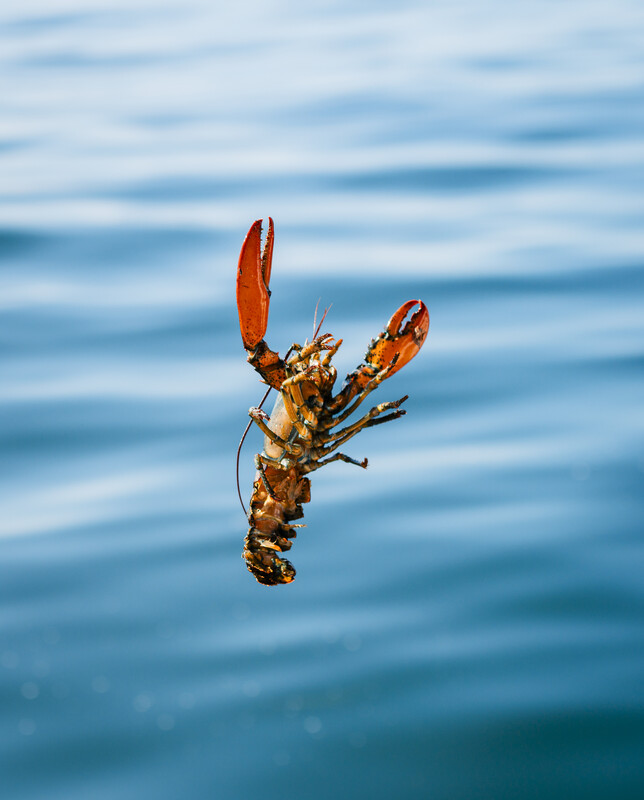
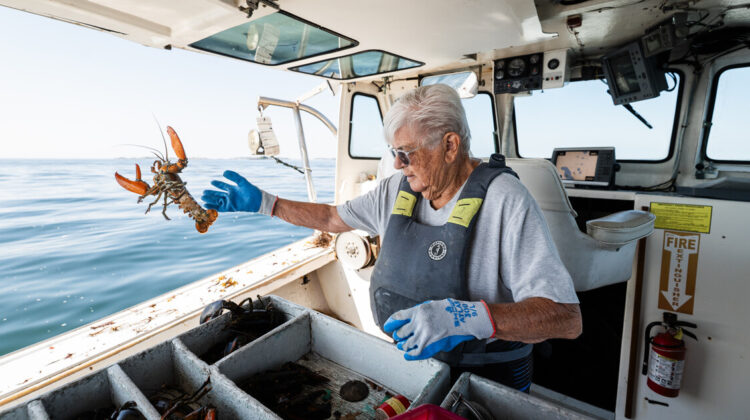
“You never know what you’ll find when you haul a trap,” she says. “Maybe five lobsters, maybe 20. It’s the thrill of it — and it’s hard to give up.”
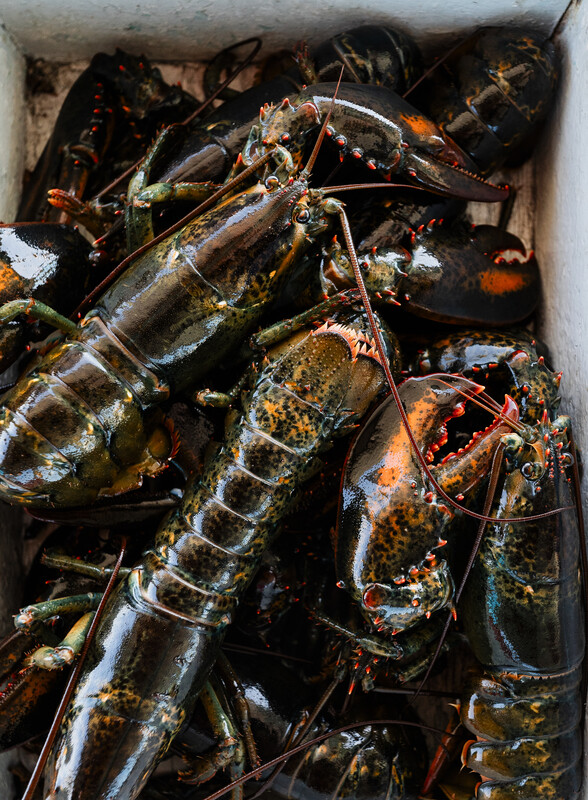
Their catch is sold by the pound to Patriot Lobster in Salem, where it enters a system of retail and wholesale distribution.
Michaud takes pride in the sustainability practices that have long been part of the trade. Egg-bearing females are returned to the water after receiving a V-notch — a small cut in the tail that protects them for years to come.
“All the old fishermen were in for preserving the lobsters, making sure there was more for the next generation,” she says. “They didn’t need someone from college to tell them what to do. They did it because they wanted the resource to be there.”
Michaud has seen the industry evolve.
The trap limit is now 800 per boat, though she no longer attempts that scale. Younger lobstermen and women are joining the ranks, sometimes starting in high school to support themselves through college.
“It’s a good life if you don’t mind working,” she says. “I raised eight kids on lobstering. My father raised three daughters on lobstering. It can be done.”
Her advice to the next generation is pragmatic but encouraging: “If you’re not ready to sit in an office and you want to be independent, it’s a good way to earn a living.”
Though she jokes about selling her boat in the coming years, Michaud remains deeply attached to the work.
In Florida winters, she and her husband prepare ropes with new breakaway technology designed to protect whales. On the water, she always wears her life jacket, a modern model that inflates on command.
“I think it’s good for people to work or volunteer or do something,” she says. “When you start sitting in that rocking chair, you slow down too much. I hope there’s always something for me to do.”
For Michaud, the sea is not just a livelihood but an inheritance, one she has guarded fiercely and passed down through generations.
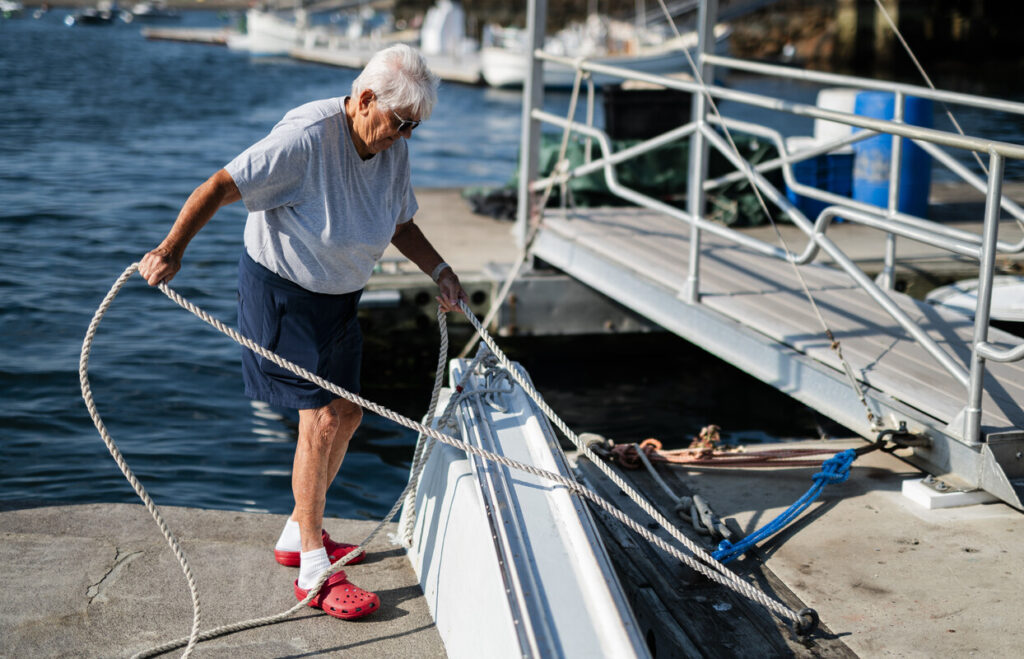
Standing on the dock, surrounded by traps and ropes, she still speaks of lobstering with the wonder of a girl pulling her first catch from the water.
“I was born here, and I’m spoiled,” she says. “There’s no better place to be. It’s heaven.”